

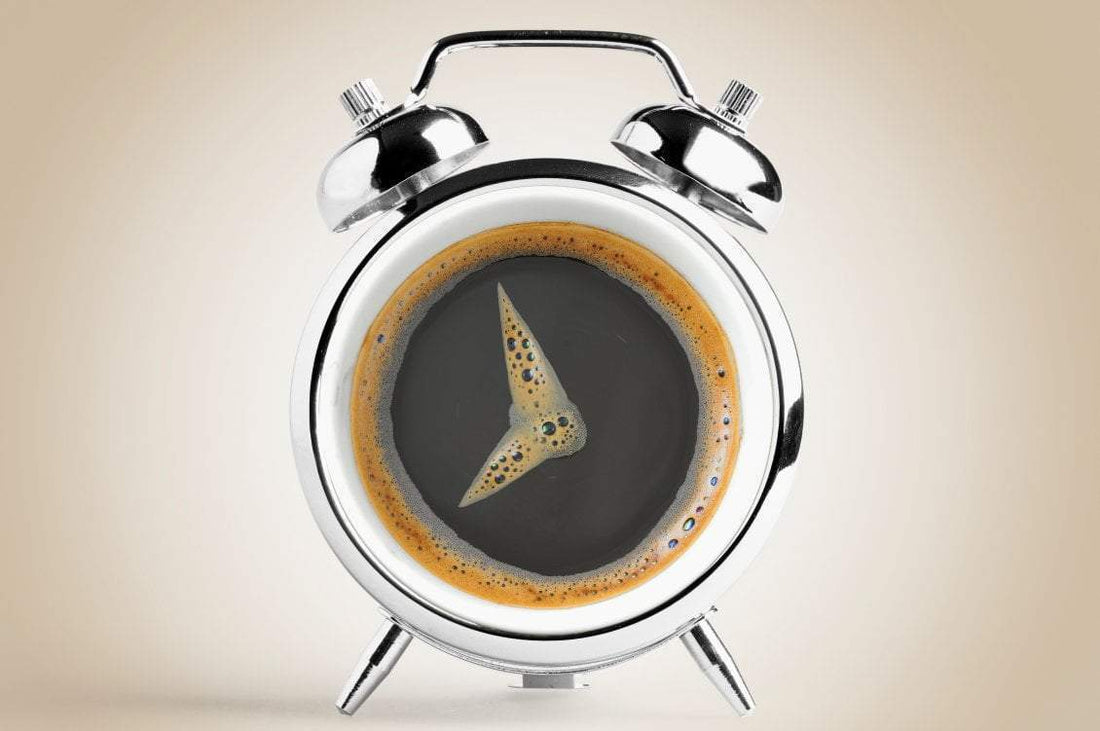
When Should You Drink Your Coffee? What the Evidence Actually Says
Share
Keep your coffee in the morning. Whether you drink it the second you wake up or give it an hour first is a matter of preference, not proven science. The popular advice to delay coffee for 90 minutes because of cortisol is not backed by strong primary research. What does have large-scale evidence behind it is the broader pattern: in a 2025 study of 40,725 US adults, people whose coffee drinking clustered in the morning had a 16% lower risk of death from any cause than people who drank none, while people who sipped it all day long did not show that benefit.
Originally written by Jeff Lund, freelance writer, Ketchikan, Alaska. Reviewed and updated by Danny Lehr, CrossFit Level 3 Trainer and USA Weightlifting coach. November 2026.
Should you wait to drink coffee after waking up?
You can if you want to, but the evidence for a required waiting period is thin. The common version of this advice says cortisol peaks shortly after you wake, so caffeine on top of it is wasted or builds tolerance faster. It is a tidy story and it circulates widely, but it traces back to popular articles rather than to controlled human trials showing worse outcomes from drinking coffee immediately on waking. We used to state it here more confidently than the evidence supports, so we have corrected it.
What is true is that plenty of people, including Danny, feel better putting water and a little daylight ahead of the first cup. That is a preference worth testing on yourself. It is not a rule.
Does the time of day you drink coffee actually matter?
This is where there is real data, and it points at the time of day rather than the minutes after waking. A 2025 analysis in the European Heart Journal followed 40,725 US adults for a median of 9.8 years and sorted them into drinking patterns. A morning-type pattern covered 36% of people. An all-day-type pattern covered 14%.
| Comparison | Result | 95% CI | Statistically significant? |
|---|---|---|---|
| Morning pattern vs no coffee, all-cause death | HR 0.84 (16% lower risk) | 0.74 to 0.95 | Yes |
| Morning pattern vs no coffee, cardiovascular death | HR 0.69 (31% lower risk) | 0.55 to 0.87 | Yes |
| All-day pattern vs no coffee | No hazard ratio reported in abstract | Not reported | No |
| Timing x amount consumed | P for interaction = 0.031 | Not applicable | Yes |
All comparisons are against people who drank no coffee at all. This is observational research, so it shows an association and not a cause. We broke the whole paper down, including what it does not prove, in our full write-up on the best time to drink coffee.
Is it bad to drink coffee all day?
The study did not find that it was harmful. It found that the all-day pattern was not significantly associated with lower mortality, which is a different claim from showing it raised risk. Nobody is telling you the 2pm cup is hurting you. The finding is that the benefit showed up in the morning pattern.
What about hydration first?
You wake up at least a little dehydrated, and while caffeine is only a mild diuretic, coffee is still not water. Drinking water when you get up is a cheap habit with no downside. Danny puts down 30 oz of water before his first cup. That is a routine, not a prescription.
What about coffee before training?
For most lifters the morning cup and the pre-workout cup are the same cup, which makes this easy. Caffeine before a session has far better evidence behind it than any waking-up protocol does, and the morning is also when it does the least damage to that night's sleep. If you train early, the question answers itself.
If that cup is doing real work, it may as well be worth drinking. PR Blend is what we roast for people who are up before the gym is, and the rest of the coffee lineup is built the same way. If it is a daily standing appointment, the Coffee of the Month annual plan keeps you from running out mid-week.
Find what works for you
Some people read, some journal, some stretch before the first cup. Humans are adaptable, so not being a morning person does not settle the question for you. Test it for a week each way and keep whichever one makes your mornings better. Just keep the coffee in the morning.
Frequently asked questions
Should you wait 90 minutes to drink coffee after waking up?
There is no strong primary evidence requiring it. The cortisol-based advice is widely repeated but comes from popular articles rather than controlled trials. If waiting makes you feel better, wait. If it does not, do not.
What is the best time of day to drink coffee?
Morning. In a 2025 study of 40,725 US adults, a morning drinking pattern was associated with a 16% lower risk of death from any cause compared with drinking no coffee, while an all-day pattern was not significantly associated with lower risk.
Does drinking coffee right when you wake up cause caffeine dependence?
We are not aware of primary human research establishing that the timing specifically drives dependence. Tolerance is driven mainly by regular intake over time, not by what hour you take it.
Is drinking coffee in the afternoon bad for you?
The 2025 study did not find harm from the all-day pattern, only an absence of the benefit the morning pattern showed. Afternoon caffeine is worth watching mainly for its effect on your sleep that night.
Should I drink water before coffee?
It is a reasonable habit. You wake up mildly dehydrated and coffee is not a substitute for water, though caffeine is only a mild diuretic and coffee still contributes fluid.
This is general information, not medical advice.
Sources
- Wang X, Ma H, Sun Q, Li J, Heianza Y, Van Dam RM, Hu FB, Rimm E, Manson JE, Qi L. Coffee drinking timing and mortality in US adults. European Heart Journal. 2025;46(8):749-759. PubMed abstract.