
How Much Caffeine Intake Is Recommended Per Day? (Updated 2026)
Most healthy adults can have up to about 400 mg of caffeine a day, roughly four 8 oz cups of brewed coffee. That is the figure both the FDA and the Mayo Clinic use. If you are taking caffeine before training, the number that matters is different: research doses it by body weight, at about 3 mg per kilogram.
Key numbers at a glance
- Daily ceiling for most healthy adults: about 400 mg, per FDA guidance.
- Average 8 oz brewed coffee: roughly 100 mg, though real cups range from about 50 mg to 200 mg.
- Performance dose before lifting: about 3 mg per kg of body weight, or 240 mg for an 80 kg lifter. In a 2013 randomized crossover trial that dose improved bar velocity against light loads by 5.4% to 8.5% versus placebo, significant at P = 0.039 to 0.003.
- The upper end: in that trial 9 mg/kg was needed to improve the heaviest loads, and at that dose adverse side effect frequency ran 15% to 62% across the individual symptoms.
Reviewed and updated by Danny Lehr, CrossFit Level 3 Trainer and USA Weightlifting coach. October 2026.
How Coffee Can Improve Your Day
Coffee is rich in antioxidants and coffee drinking tracks with a long list of health markers, including lower type 2 diabetes risk. We covered the cancer scare that went nowhere if you want that history.
But most of us do not drink it for the antioxidants. We drink it because it is an all-natural source of caffeine. Caffeine looks enough like adenosine, the molecule that makes you feel sluggish as it builds up, that it binds to those receptors instead. Nothing is added. Something is blocked. That is the whole mechanism, and it is why the effect has a ceiling.
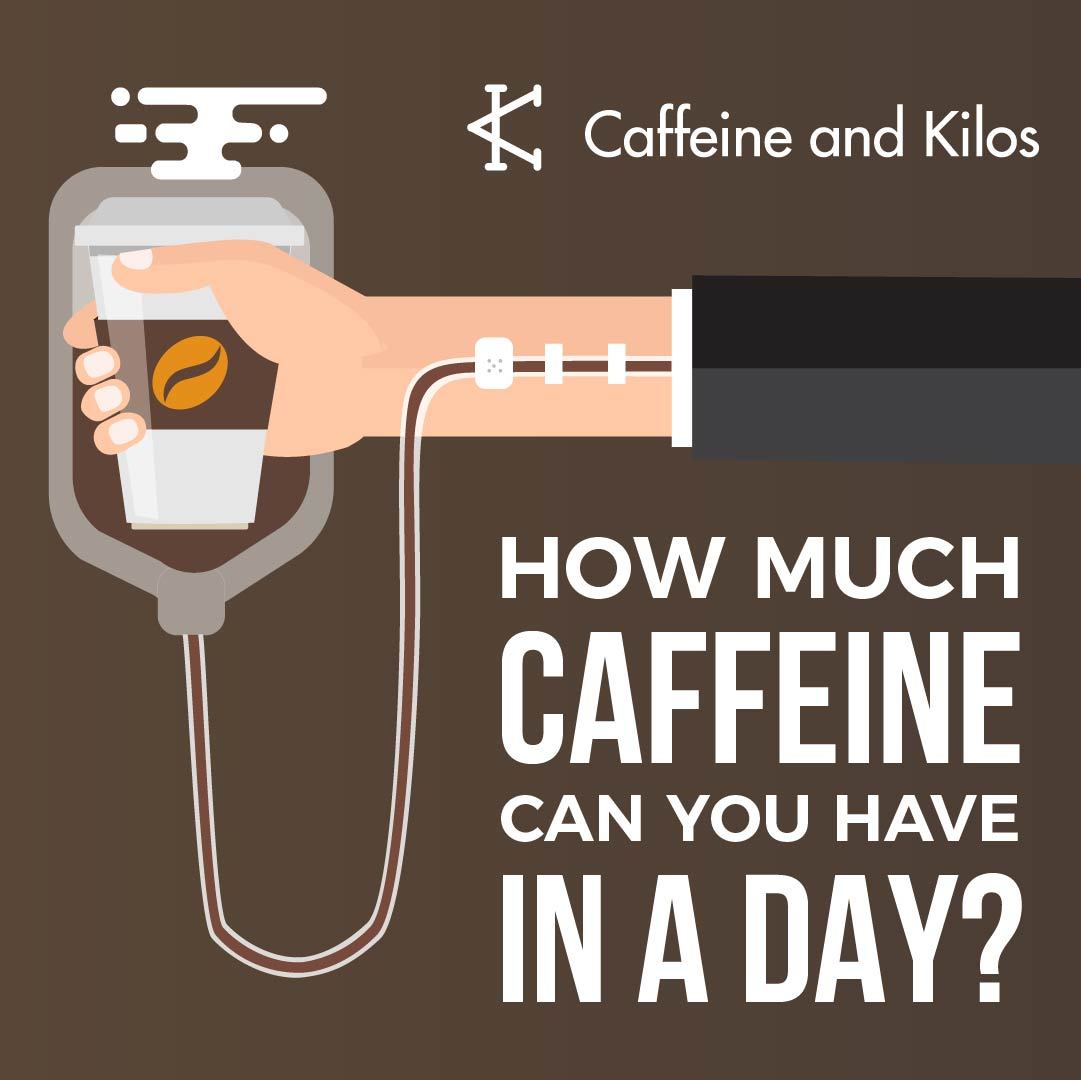
How Much Caffeine Can You Have in a Day?
About 400 mg for most healthy adults. Above your own tolerance, the familiar list shows up:
- Rapid heartbeat
- Sour stomach
- Headaches
- Jitters and anxiety
- Trouble sleeping
- Irritability
Tolerance is individual, so treat 400 mg as a guardrail and your symptoms as the real signal. If you are pregnant, have high blood pressure or a heart condition, or take medication that interacts with stimulants, your number is lower and that is a conversation for your doctor, not a blog post.

Caffeine Dosage: How Many Cups of Coffee a Day?
Four, give or take, depending on what is in the cup. Caffeine content comes down to the bean, the roast and the brew. PR Blend sits on the higher end on purpose, a break room pod on the lower. At about 100 mg per 8 oz cup, 400 mg is roughly four cups, but that average is standing in for a real range of about 50 mg to 200 mg.
What Determines Your Personal Recommended Caffeine Intake?
Two things, mostly: nature and nurture, which here means genetics and tolerance.
Genetics and How Many Cups of Coffee a Day
Your ancestors handed you a starting point. Variants in the genes that control how fast you clear caffeine help explain why one cup wires your friend for six hours and does nothing for you by 10 a.m.
Building Caffeine Intake Tolerance
Tolerance behaves a lot like the weight room. Regular intake blunts the hit, which is real and not in your head, and it is why the honest answer to "how much" is a range.
Other Factors in Reaching Daily Caffeine Limit
Mental health conditions, high blood pressure, diabetes and various medications all lower your practical ceiling. Sleep debt is the sneaky one: caffeine hides the deficit without paying it off.
What is the Right Coffee Dosage for Me?
Start at two cups and let symptoms set the ceiling. Almost everything unpleasant about overshooting is short-term, so if you get a racing heart or anxious thoughts, make one less cup tomorrow. Most people land in the two to four cup range once they are brewing at home and know what is in it.
When is the Best Time to Reach Max Caffeine Dosage?
Earlier than you think. In a controlled sleep lab trial, 400 mg taken even 6 hours before bed cut measured sleep by more than an hour, and the people taking it did not notice. That is the case for front-loading the day and being deliberate about the afternoon cup.
For training, caffeine peaks in the blood around 30 to 60 minutes in, so the drive to the gym is too late to make the most of it. The dosing side is in how much caffeine to take before lifting.
Best Way to Get Max Caffeine Per Day
Know what is in the cup. Dosing by body weight only works if the number is consistent, which is the quiet case for one coffee you trust over four you do not. PR Blend is the one we built for that, and the rest of the coffee lineup covers the days you want something lighter. There is a wide gap between blowing past your daily limit and sitting in the sweet spot. Find yours, then stop adjusting it.
FAQ
How much caffeine per day is too much?
For most healthy adults, consistently going past about 400 mg a day is where the FDA draws the line. Your own tolerance may put that number lower, and pregnancy, heart conditions and some medications lower it further.
How much caffeine should I take before a workout?
Research doses it by body weight, not cups: about 3 mg per kilogram, so roughly 240 mg or two to three cups for an 80 kg lifter. A 2013 randomized trial found that dose improved bar velocity against light loads by 5.4% to 8.5% versus placebo.
Is 200 mg of caffeine a lot?
No. 200 mg is about two 8 oz cups and sits at roughly half the 400 mg daily guidance for healthy adults. It is also in the performance dose range for a smaller lifter.
How late is too late for coffee?
Later than most people assume. In a sleep lab trial, 400 mg taken 6 hours before bed still cut measured sleep by over an hour without participants noticing, so an afternoon cutoff is reasonable.
Sources
- U.S. Food and Drug Administration. Spilling the Beans: How Much Caffeine is Too Much? fda.gov
- Mayo Clinic. Caffeine: How much is too much? mayoclinic.org
- Pallares JG, et al. Neuromuscular responses to incremental caffeine doses: performance and side effects. Med Sci Sports Exerc. 2013;45(11):2184-92. pubmed.ncbi.nlm.nih.gov/23669879
- Drake C, et al. Caffeine effects on sleep taken 0, 3, or 6 hours before going to bed. J Clin Sleep Med. 2013;9(11):1195-200. pubmed.ncbi.nlm.nih.gov/24235903
Note on this update: an earlier version cited a secondary news write-up claiming caffeine timing produced up to 64% greater alertness on 65% less caffeine. We could not trace it to a primary paper, so it was removed rather than left standing. General information, not medical advice.